
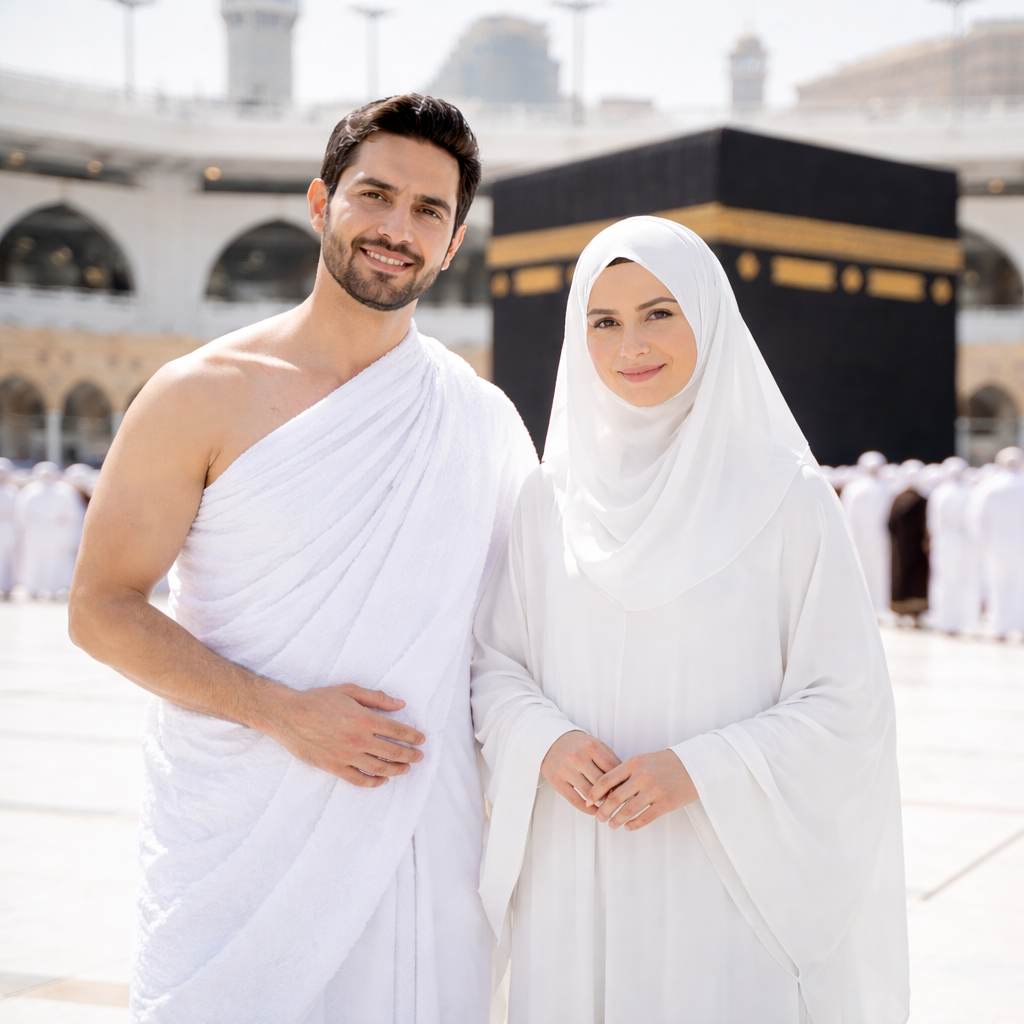
What Is Ihram?
Ihram refers to:
-
A spiritual state of consecration for Umrah or Hajj
-
Specific clothing worn by pilgrims (especially men)
-
A set of rules that govern behavior until Ihram is exited
Once Ihram is assumed, the pilgrim must strictly observe its regulations until completion of the relevant rituals.
Ihram Clothing Requirements
4
For Men
-
Two unstitched white cloths:
-
Izar – wrapped around the waist
-
Rida – draped over the upper body
-
-
No stitched garments (shirts, pants, underwear)
-
No head covering (caps, turbans)
For Women
-
Any modest, loose-fitting clothing
-
Face and hands must remain uncovered
-
No specific color is required (black/white is cultural, not mandatory)
👉 Footwear (Both Men & Women)
-
Sandals/slippers that leave the ankle and upper foot exposed
-
For men, toes should ideally be visible
When and Where to Enter Ihram (Miqat)
Pilgrims must enter Ihram before crossing the Miqat boundary, depending on their travel route.
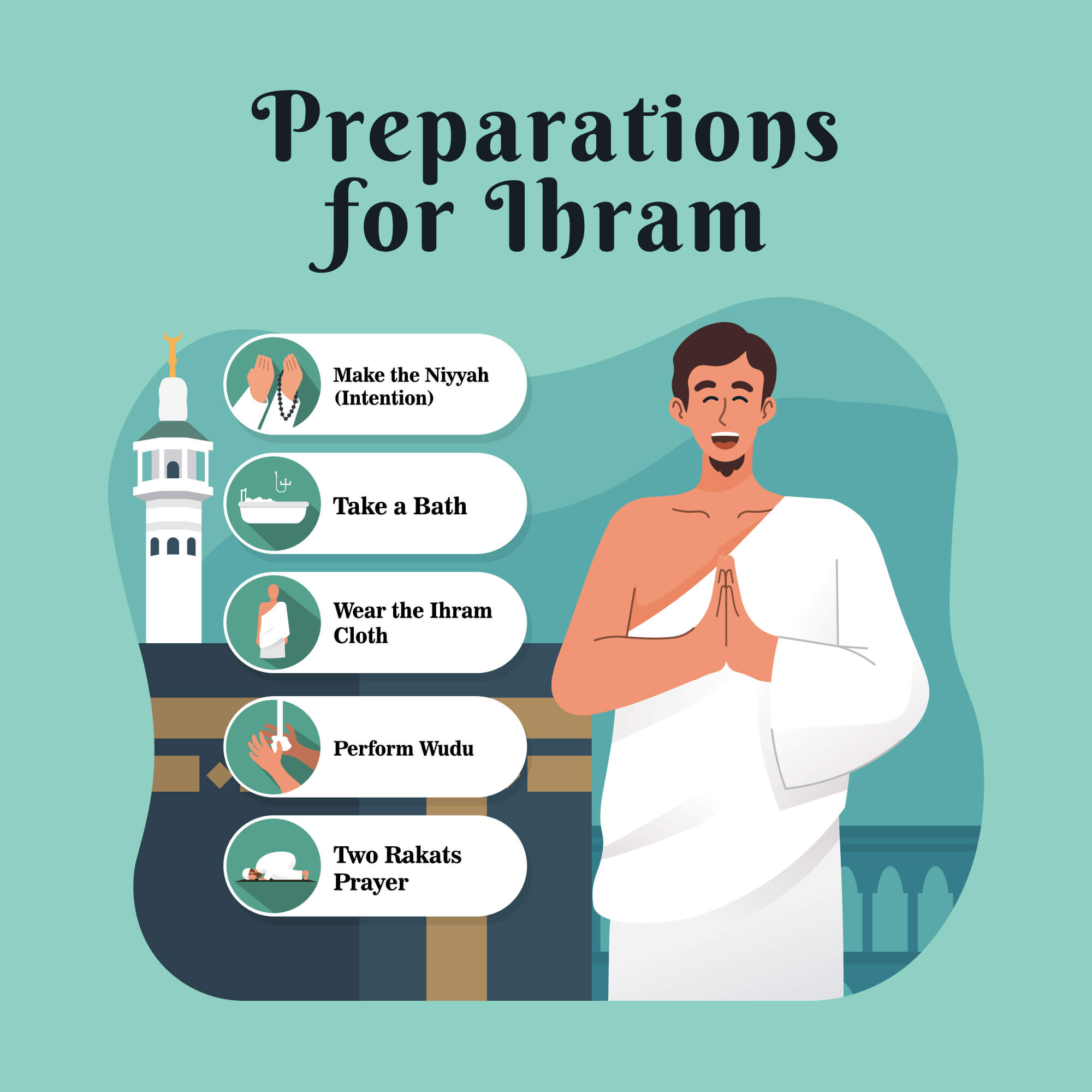
Steps to Enter Ihram
-
Perform Ghusl (full ritual bath)
-
Trim nails, remove unwanted hair (before Ihram)
-
Apply perfume before, not after, entering Ihram
-
Wear Ihram clothing
-
Pray two rak‘ahs (recommended)
-
Make intention (Niyyah) for Umrah or Hajj
-
Begin reciting Talbiyah
Talbiyah (Essential Supplication)
لَبَّيْكَ اللَّهُمَّ لَبَّيْكَ، لَبَّيْكَ لَا شَرِيكَ لَكَ لَبَّيْكَ، إِنَّ الْحَمْدَ وَالنِّعْمَةَ لَكَ وَالْمُلْكَ، لَا شَرِيكَ لَكَ
Meaning:
“Here I am, O Allah, here I am. You have no partner, here I am. Indeed, all praise, blessings, and sovereignty belong to You. You have no partner.”
📌 Talbiyah should be recited frequently until reaching the Haram.
Prohibited Acts During Ihram (Muharramat al-Ihram)
Once in Ihram, the following are strictly forbidden:
1. Grooming & Appearance
-
Cutting hair or nails
-
Shaving or trimming beard
-
Using perfume (body, clothes, soap with fragrance)
2. Clothing Violations
-
Wearing stitched clothing (men)
-
Covering the head (men)
-
Covering the face or hands with gloves/niqab (women)
3. Marital Relations
-
Sexual intercourse
-
Romantic touching or kissing
-
Explicit talk related to intimacy
4. Hunting & Harm
-
Hunting land animals
-
Assisting in hunting
-
Killing insects unnecessarily
5. Ethical & Behavioral Rules
-
No arguing, fighting, or foul language
-
No lying, backbiting, or insults
-
No cutting trees or plants in the Haram area
📖 “So whoever intends to perform Hajj therein, there is to be no sexual relations, no sin, and no argument during Hajj.”
— Surah Al-Baqarah (2:197)
What Is Allowed During Ihram
Despite common confusion, the following are permitted:
-
Bathing or showering (without scented products)
-
Using unscented soap
-
Wearing glasses, watches, hearing aids
-
Using belts or money pouches
-
Carrying bags or umbrellas
-
Treating illness or wounds
-
Changing Ihram cloth if dirty
Mandatory Rituals While in Ihram
While in Ihram, the pilgrim must:
-
Maintain intention (niyyah) throughout
-
Frequently recite Talbiyah
-
Observe patience, humility, and discipline
-
Avoid all prohibitions until Ihram is exited
Exiting Ihram (Tahallul)
For Umrah
-
After completing Sa‘i
-
Men shave or trim hair (shaving preferred)
-
Women trim a small portion of hair
For Hajj
-
Partial exit after stoning Jamrat al-Aqabah
-
Complete exit after Tawaf al-Ifadah and Sa‘i
Once exited, all normal activities become lawful again.
Penalties for Violations (Fidyah & Dam)
If a prohibition is violated unintentionally, compensation may be required:
-
Fidyah – fasting, feeding the poor, or sacrifice
-
Dam – animal sacrifice (for major violations)
📌 Intentional violations carry greater consequences and may invalidate the pilgrimage.
Common Mistakes Pilgrims Make
-
Applying scented soap unknowingly
-
Crossing Miqat without Ihram
-
Covering the head due to heat
-
Arguing in crowds
-
Assuming women must wear black only
Spiritual Wisdom Behind Ihram
Ihram strips away:
-
Social status
-
Wealth distinctions
-
Ego and pride
It reminds every pilgrim that before Allah ﷻ, all are equal, humble servants seeking mercy and forgiveness.
Final Advice
Ihram is not only about rules—it is about self-control, purity, and presence of heart. Observing its regulations carefully transforms Umrah or Hajj from a physical journey into a life-changing spiritual experience.